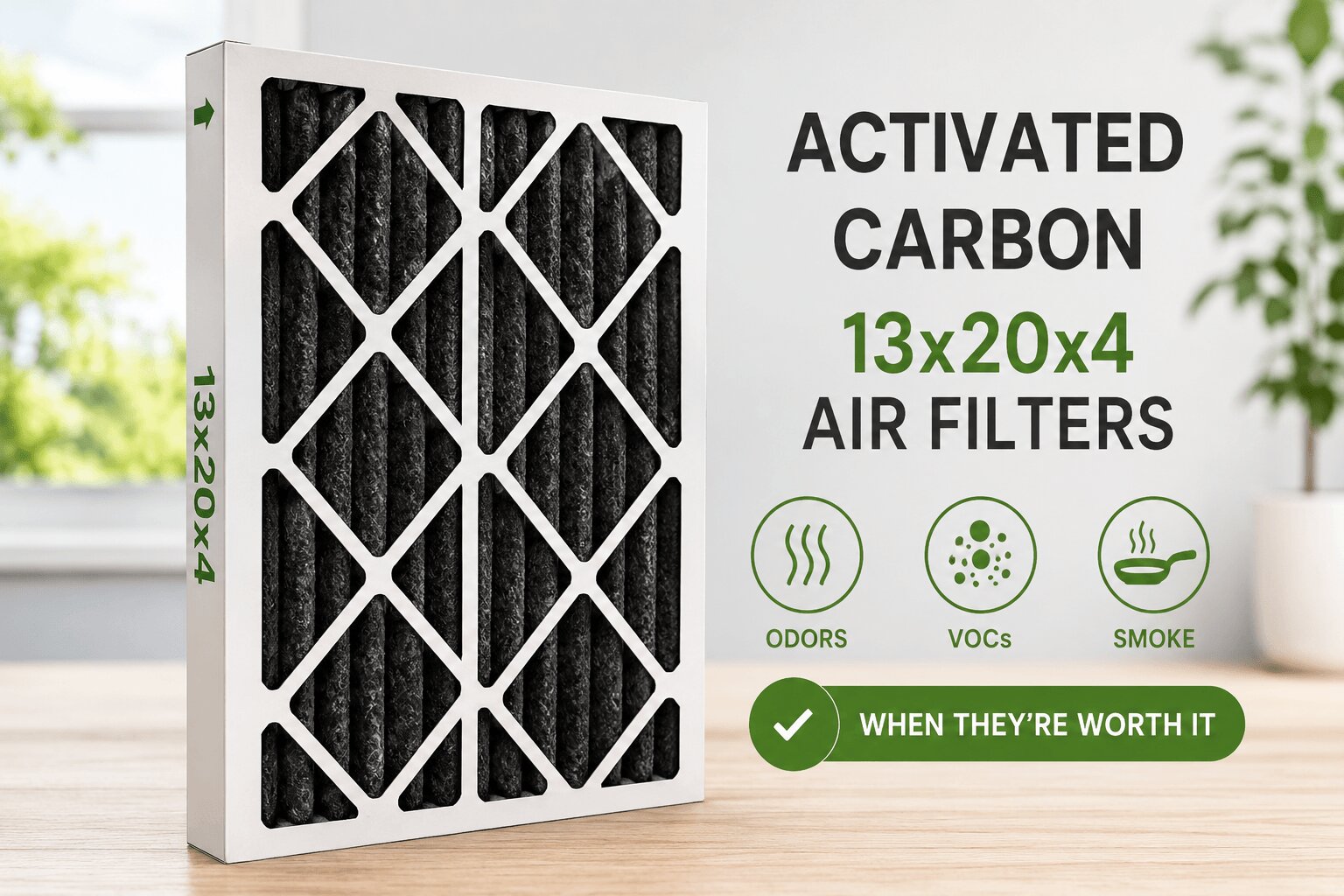
Activated Carbon 13x20x4 Air Filters: When They're Worth It
Don't take your indoor air for granted. The standard pleated 13x20x4 filter in your return grille catches dust, pet hair, and pollen by the gram. What it can't catch is the wet-dog smell, the salmon-from-Tuesday, or the off-gassing from the vinyl plank floor your contractor finished last month. Activated carbon can. The question is whether the upgrade earns its keep in your house.
We've spent more than a decade making 4-inch filters for South Florida homes, where humidity, dander, and ocean-air salt all end up in the same return. Here's the honest version of when the 13x20x4 carbon swap pays off, and when a quality pleated filter is doing everything you need it to.
TL;DR Quick Answers
13x20x4 Air Filters
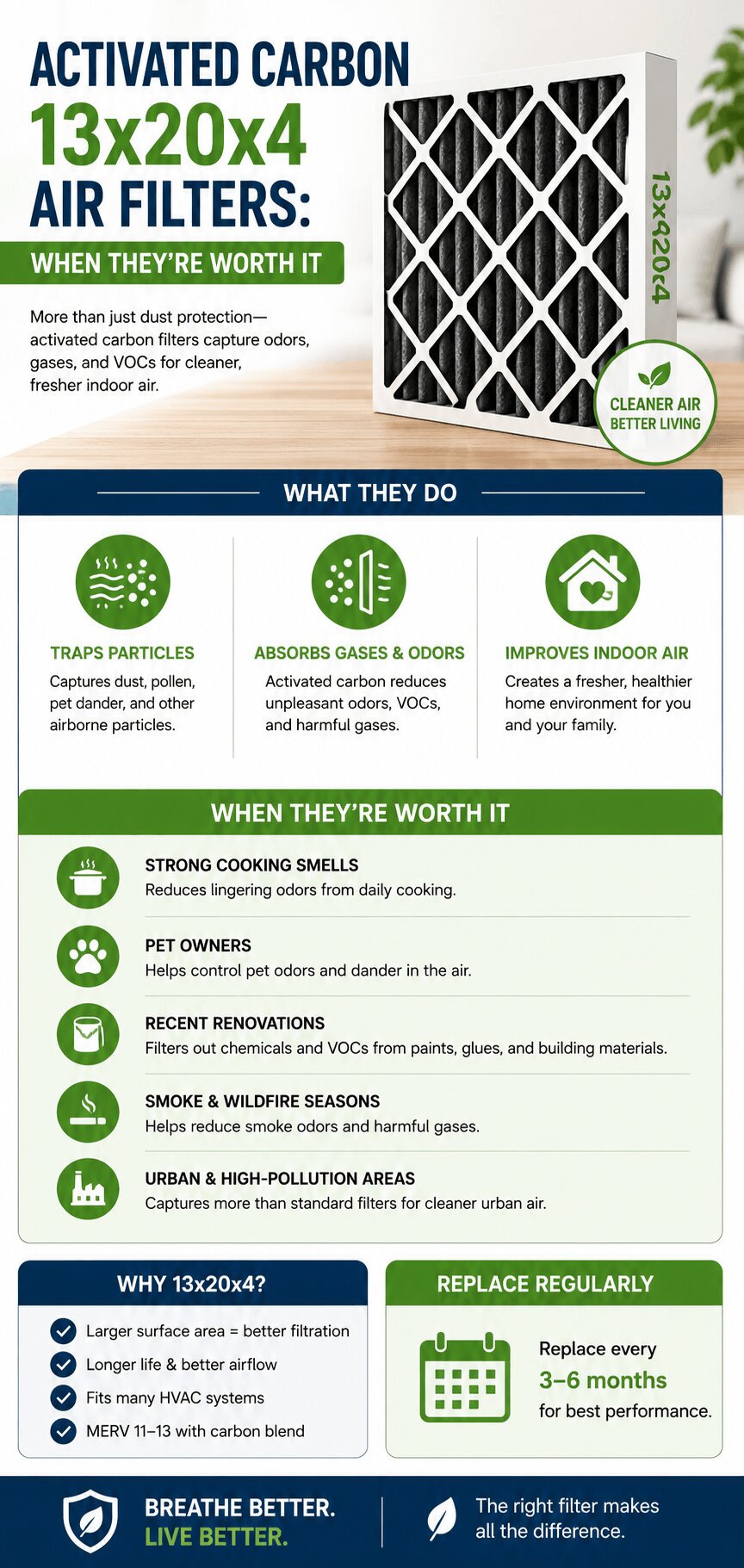
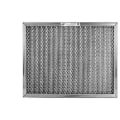
A 13x20x4 air filter is a 4-inch-deep HVAC filter measuring 13 inches by 20 inches by 4 inches. It fits central heating and cooling systems with a 4-inch return air housing. The extra depth holds more media than a 1-inch filter, so it lasts three to six months and pulls cleaner air through with less strain on your blower.
Key things to know:
Actual size: 13" x 20" x 4". Confirm your housing depth before ordering.
MERV options: typically MERV 8, MERV 11, or MERV 13.
Activated carbon versions also capture odors, smoke, and VOCs.
Replacement cycle: every 3 to 6 months under normal use.
Best fit for: homes with pets, allergies, smoke exposure, or recent renovations.
Installation: the airflow arrow on the frame points toward the blower.
We've been making 4-inch filters in this size and 600+ others for more than a decade. Our 13x20x4 air filter selection includes pleated, MERV 11, MERV 13, and activated carbon options.
Top Takeaways
A standard pleated 13x20x4 catches particles. Activated carbon adds gas and odor adsorption on top.
Worth the upgrade for pets, smoke, VOCs, lingering cooking smells, or persistent allergy symptoms.
Probably overkill for homes with no pets, no smokers, and no recent renovations.
Target MERV 8 to MERV 13, depending on what your HVAC system can handle.
Change a 4-inch carbon filter every three to six months.
Install with the airflow arrow pointing toward the blower.
How Activated Carbon 13x20x4 Air Filters Work (and When to Skip Them)
A standard 13x20x4 air filter pulls particles out of moving air using mechanical filtration, with performance rated by MERV (Minimum Efficiency Reporting Value). An activated carbon 13x20x4 does the same job and adds a layer of porous carbon that traps gases and odor molecules through a process called adsorption, not absorption. If you want the science end of that, this overview of air filtration covers it well.
Most residential carbon filters in this size run MERV 8 to MERV 13. That range handles everyday dust plus the lingering smells that drive people to buy three plug-in air fresheners. The carbon upgrade earns its keep in homes that match any of these conditions:
Pets living indoors, especially dogs or cats with strong odor
Smokers in or near the home, or wildfire smoke pulling in through the return
Recent paint, flooring, cabinets, or furniture off-gassing VOCs
Cooking smells that stick around 24 hours after dinner
Allergy or sinus symptoms a standard pleated filter isn't moving the needle on
It probably isn't necessary for homes with no pets, no smokers, no recent renovations, and an older blower motor that struggles with denser media. (The manufacturer's static-pressure rating answers that last one in about ten seconds.)
A quick word on the other 13x20x4 options people consider: a true 13x20x4 HEPA filter is rare in residential systems because most home blowers can't pull air through it. A 13x20x4 electrostatic air filter handles some particles via static charge but doesn't touch odors. The best washable air filter 13x20x4 saves money over time and skips the carbon layer entirely, usually capping at MERV 4 to 8. For a home dealing with smells or gases, the activated carbon pleated 13x20x4 is the option that actually does the job.
How to install a 13x20x4 air filter: power the system off, slide the old filter out, find the airflow arrow on the new frame, slide it in with the arrow pointing toward the blower, close the housing, and power back on. Four-inch filters typically last three to six months, roughly double the life of a 1-inch.
Shopping notes: look for U.S.-made construction, a sealed frame, electrostatically charged media, and a clearly listed MERV rating. We make activated carbon 13x20x4 air filters to those specs at Filterbuy, in more than 600 sizes, shipped from a U.S. facility. For Miami Beach homeowners specifically, "13x20x4 air filter near me" almost always ends in online ordering anyway, since local hardware stores rarely stock 4-inch carbon sizes.
"After a decade testing filters in South Florida homes, I'll tell you straight: if I can smell something within ten feet of your front door, a 13x20x4 carbon at MERV 11 will outperform any spray, candle, or plug-in you've tried."
— Filterbuy Team
7 Essential Resources
If you want to go beyond marketing copy before buying, these government and nonprofit sources are where we keep coming back:
1. EPA — The Inside Story: A Guide to Indoor Air Quality — https://www.epa.gov/indoor-air-quality-iaq/inside-story-guide-indoor-air-quality
2. EPA — Guide to Air Cleaners in the Home — https://www.epa.gov/indoor-air-quality-iaq/guide-air-cleaners-home
3. EPA — Volatile Organic Compounds' Impact on Indoor Air Quality — https://www.epa.gov/indoor-air-quality-iaq/volatile-organic-compounds-impact-indoor-air-quality
4. American Lung Association — Air Cleaning — https://www.lung.org/clean-air/indoor-air/protecting-from-air-pollution/air-cleaning
5. EPA — Introduction to Indoor Air Quality — https://www.epa.gov/indoor-air-quality-iaq/introduction-indoor-air-quality
6. EPA — Indoor Air Quality (Report on the Environment) — https://www.epa.gov/report-environment/indoor-air-quality
7. CPSC — The Inside Story: A Guide to Indoor Air Quality — https://www.cpsc.gov/Safety-Education/Safety-Guides/Home/The-Inside-Story-A-Guide-to-Indoor-Air-Quality
3 Statistics Worth Knowing
Americans spend about 90 percent of their time indoors. That single number is why the filter in your return grille matters more than the air-quality alert on your phone. (EPA: https://www.epa.gov/report-environment/indoor-air-quality)
Indoor concentrations of some pollutants run 2 to 5 times higher than typical outdoor levels, and occasionally far higher than that depending on what's off-gassing inside. (EPA: https://www.epa.gov/report-environment/indoor-air-quality)
Just after activities like paint stripping or applying new finishes, indoor VOC levels can hit up to 1,000 times outdoor background. Activated carbon brings them back down. (EPA: https://www.epa.gov/indoor-air-quality-iaq/volatile-organic-compounds-impact-indoor-air-quality)
Final Thoughts and Opinion
The carbon upgrade is targeted, not magical. If your air smells fine and your sinuses are clear, the only thing a 13x20x4 carbon filter does over a quality pleated filter at the same MERV is cost you a few more dollars per change.
We'll tell you that straight. But if you live with pets, near a smoker, in a freshly painted condo, or downwind of fire season, this is one of the cheapest, easiest indoor air improvements you can make to your home.
The 4-inch depth is half the value by itself. More media means more surface area, lower static pressure than a 1-inch panel at the same MERV, and a longer service life. Adding carbon to that platform makes a real difference inside the first week. Most of the homeowners we've helped don't go back.
Frequently Asked Questions
How often should I change a 13x20x4 activated carbon air filter?
Three to six months in most homes. Heavy pet households or homes with smokers may need to swap every two to three months because carbon saturates faster under heavy load.
Does an activated carbon filter restrict airflow more than a standard pleated filter?
A little, but the 4-inch depth offsets most of it. A 13x20x4 carbon filter typically runs lower static pressure than a 1-inch high-MERV filter at the same rating, which is why we recommend going to a 4-inch size whenever the system supports it.
What MERV rating should I choose for a 13x20x4 carbon filter?
MERV 8 to MERV 11 fits most homes. MERV 13 is a strong choice for allergy or asthma sufferers, as long as your blower handles it without straining.
Can I get a washable 13x20x4 air filter with carbon?
A few exist, but most washable filters skip the carbon layer entirely. Disposable 4-inch pleated carbon filters do a better job on odor control than washable options.
Is a 13x20x4 HEPA filter the same as activated carbon?
No. HEPA captures very fine particles down to 0.3 microns. Carbon captures gases and odors. True HEPA is also rare in residential 13x20x4 sizes because most home systems can't pull air through it.
Will an activated carbon filter help with mold?
It can reduce musty smells caused by mold, but it doesn't fix the source. If you smell mold in the house, treat the filter as a stopgap and call a remediation pro to find the cause.
Get the Right 13x20x4 Air Filter for Your Home
If pet odors, smoke, or VOCs are still hanging around after every cleaning, an activated carbon 13x20x4 is the upgrade worth making. Shop our activated carbon 13x20x4 air filters at Filterbuy and have the right size shipped to your door within days.
Learn more about HVAC Care from one of our HVAC solutions branches…
2573 Mayfair Lane Weston FL 33327
(754) 296-3528
https://maps.app.goo.gl/E3tjmKf5VSWYghGc7